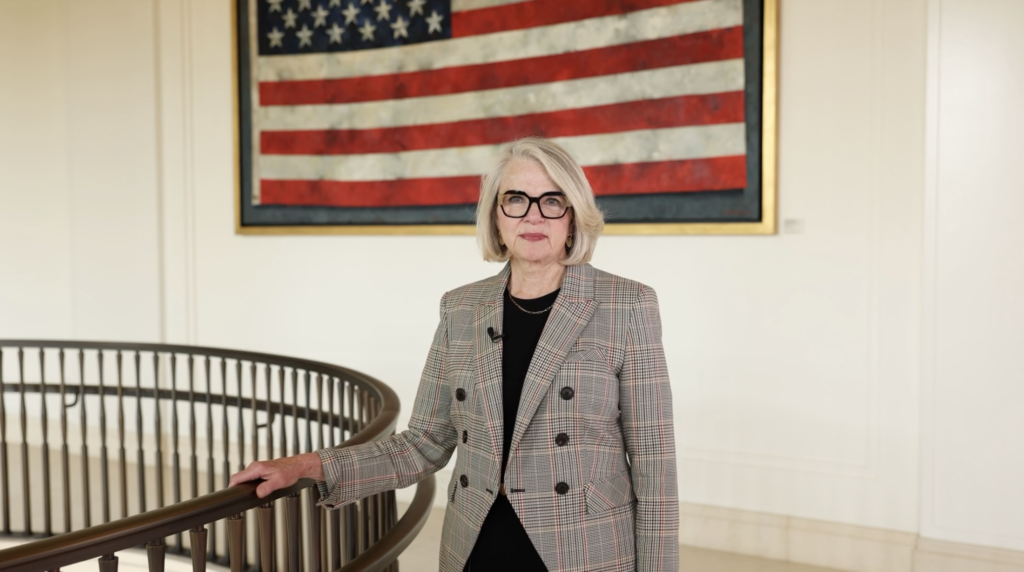

Introduction:
Presidential Leadership Scholars came to be because I knew we had something really special in this region. We had four presidential centers, it just so happened, two Republicans and two Democrats, and two living, vital former presidents. My former boss, President George W. Bush, and President Bill Clinton. I’ll never forget the day I went up and pitched this idea to President Bush and he said, “I’m gonna call him now.” He got President Clinton on the phone, they agreed it was a good idea, and the rest is history.
Describe the inaugural year of PLS.
That first year we were trying to figure it out. We knew we had a great idea. All of the presidential centers, all four, were really bought into it. And what was really fun about that year was really getting to know the folks at the Clinton Center, and George H.W. Bush Foundation and Lyndon B. Johnson Library, and really working together around a super neat idea to elevate, yes, the presidents enlivened in these libraries, but also that period in our country’s history. So, we learned a lot. We had a lot of fun learning and working together. It was a terrific year as we put the bones in place and perfected it over time.
How would you describe the evolution of PLS?
One of the things that has been the most valuable part of PLS is the value of the network. The relationships that these lucky Scholars have in meeting people they would not otherwise know. And really falling in love with each other and developing lifelong relationships. They’re now part of a large group of about 600 leaders. I think we probably underappreciated the value of that network, and were focused, obviously, on the quality of the curriculum, the events that we had, and the resources we could offer. But really, the gift that keeps on giving is the relationships the Scholars have with each other.
What’s your message to PLS alumni who continue to make change in their leadership roles?
One of the things that I think President Bush and President Clinton realized, and certainly Presidents H.W. Bush and LBJ exemplified and lived as well, is the need for ongoing service to our country. You know, both President Bush and President Clinton continue to invest in young leaders. They continue to do good work like we’re doing here at the Bush Center. I think the subplot here is that you can always be a part of making history. Every one of these Scholars, every one of us, as we look to our exemplars, our former presidents, to see lessons and to understand what that looks like, but also in your own life and your own work that you do, and in the projects these presidential Scholars bring to life.
In your opinion, why is it important for leaders today to continue to learn from these administrations?
All of the presidencies, from George Washington to current day, really are about our nation’s history. The placeholders of those periods of history, of course, are presidents. One of the things that I think we’re reminded of is how history does in fact repeat itself. There are a lot of lessons we can learn from the past that we can apply to today’s challenges. I’m really so proud of President Bush and President Clinton that they’ve stuck with this, and they have gotten such great value themselves through these young leaders as well. I think they’re as energized as the Scholars are. I’ve loved seeing that in action.
What are your hopes for the future of PLS?
I hope that that PLS will continue to be the mighty, strong, and long-lasting program that it has become over these last 10 years. You know, when we think about dropping a stone in a water and the ripples that come from it, that’s what this program is. I know that 10 years from now we’ll be talking about the 1,200 Scholars in this program, and the amazing work that they are doing in our country and around the world. So, I’m just thrilled that I was able to play some small part in it, to be a mother of the program and to continue to watch it bloom and grow.
What’s your favorite memory from PLS?
One of my favorite moments in the early days of this program, there was a National Archives and Records Administration meeting happening in Boston, at the Kennedy Library, and I didn’t really know the people that were stewarding the Clinton Library. And after this conversation that occurred between President Bush and President Clinton, we were launched. I’ll never forget being in Boston on a frigid night and having a drink with Stephanie Streett and Bruce Lindsey, and the LBJ folks and so forth, and really getting so excited about this idea and getting to know each other, and how we were actually Presidential Leadership Scholars, ourselves, working on this shared vision, this shared project, and bringing it to life.
Another memory, obviously, is the day the program launched. I think we were all a little bit nervous. It was at the Newseum, with two former presidents, a room full of, maybe, skeptics. But we pulled it off and it has from that very day been a great program and a great idea, and one I know that every single one of the Scholars feels so blessed and gifted to have been able to participate in it.
What did the letter from President George H.W Bush mean to you?
You know, one of the things that was special about the launch of the program was a special letter from President H.W. Bush really commending our success and pledging the support of his library, at Texas A&M, as part of it. I think we all know we have a time to take part in history, and then that time closes. So, as I reflect on current day and looking back on the tremendous contributions President H.W. Bush made, and having been at that library and College Station many times, it’s really poignant to think about the little marks that we leave and how they have a big impact into the future.
What’s one lesson you learned since the launch of the PLS program?
Our early discussions, I’ll say it like that, was how many Scholars should be in the program. And the professors from Georgetown that were helping us launch this wanted us to have a smaller class than what we ultimately ended up with. We’ve had a little bit of a discussion, I’ll call it, about whether 60 Scholars would be too many in the program. But that’s the number that has stuck and that we have made work. As I think about the 10 classes, it’d be hard to say which 10 people I wouldn’t want to be in that room, and the amazing gift that network of PLS alums is to each other and to our country.