By Ben Thielemier
In his first inaugural address, President Bill Clinton rallied the nation with a message of optimism and possibility: “There is nothing wrong with America that cannot be cured by what is right with America.”
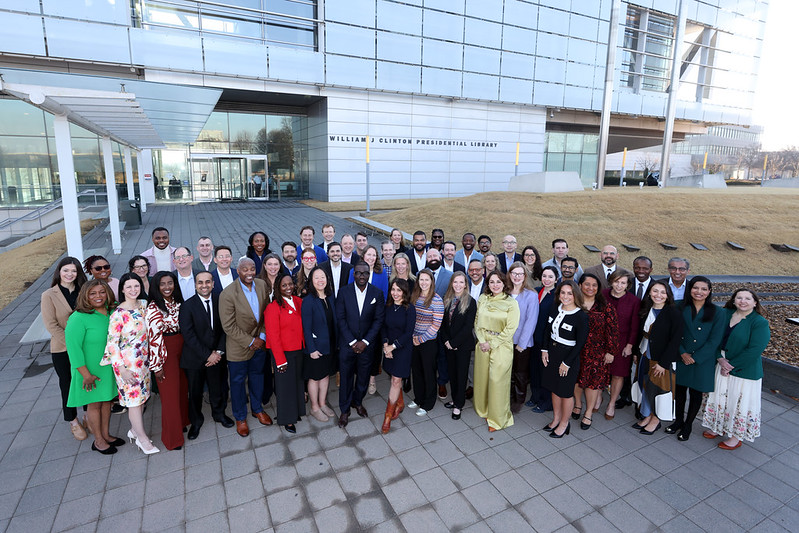
During Module Two of this year’s Presidential Leadership Scholars program at the Clinton Presidential Center, that spirit was on full display. Scholars came together from across the country and across sectors, proving that focusing on what unites us rather than what divides us truly represents what is right with America. Said one Scholar: “I was constantly reminded of how closely connected we are to one another. Despite our political, educational, geographic, or other divides, we have more in common with one another than not.”
Throughout the program, Scholars gain a perspective that encourages them to work across differences and build relationships that span traditional political, professional, and economic boundaries. Module Two focused on the essential leadership skills of vision and communication, exploring how leaders clarify what they stand for and convey that vision in ways that inspire others to act.
Through case studies and conversations about President Clinton’s leadership, Scholars examined how the clarity of his values and vision, the strength of his convictions, and his skill as a communicator shaped his presidency. As former White House Chief of Staff Mack McLarty reflected, “I’ve never seen anyone who could take complex issues and organize them and communicate them in a more clear and persuasive and substantive and authentic manner than President Clinton.”
Scholars also heard from several influential leaders who served in the Clinton administration, including Don Baer, former White House Communications Director and Director of Speechwriting; Rodney Slater, former Secretary of Transportation; and Stephanie S. Streett, former Assistant to the President and Director of Scheduling. Their experiences offered an inside look at how ideas become action when leaders communicate with clarity, authenticity, and purpose.
Baer emphasized the power of language in leadership: “Ideas matter more than anything, but words matter too. Words are the way we capture what those ideas are about….” Words help build understanding and persuade people to embrace those ideas. He reminded Scholars that effective communication is ultimately about focus and inspiration: helping those you lead understand not only what must be done but also why it matters.
At the heart of the program are the Personal Leadership Projects each Scholar brings with them. These are real-world initiatives designed to address pressing challenges in their communities and organizations. This year, Scholars’ projects focus on a wide range of issues, from alleviating food insecurity and expanding civic education and participation to increasing financial literacy for students and families and exploring how artificial intelligence can strengthen healthcare and education.
During the module, Scholars engaged with each other in hands-on activities to develop a simple yet compelling narrative describing their projects. The goal: to articulate a clear vision and tell a persuasive story that inspires others to join their efforts. These exercises underscored a core lesson of the program – that leadership requires not only strong ideas, but the ability to communicate those ideas in ways that resonate.
As Secretary Slater told the Scholars, effective leadership is ultimately measured by the impact it leaves behind: “where we’re better when I left than when I started, where we’re coming together…to a greater extent than when I started, and where the future is brighter for those who come after.”
By the end of Module Two, Scholars left Little Rock with sharpened communication skills, stronger relationships with one another, and a renewed commitment to turning vision into action. One Scholar summed the experience up this way: “I left reflecting on the importance of language, humility, and trust, and the reminder that leadership often comes down to delivering the right message, with the right evidence, to the right audience at the right time.”
Ben Thielemier is director of communications and marketing for the Clinton Foundation.