Introduction
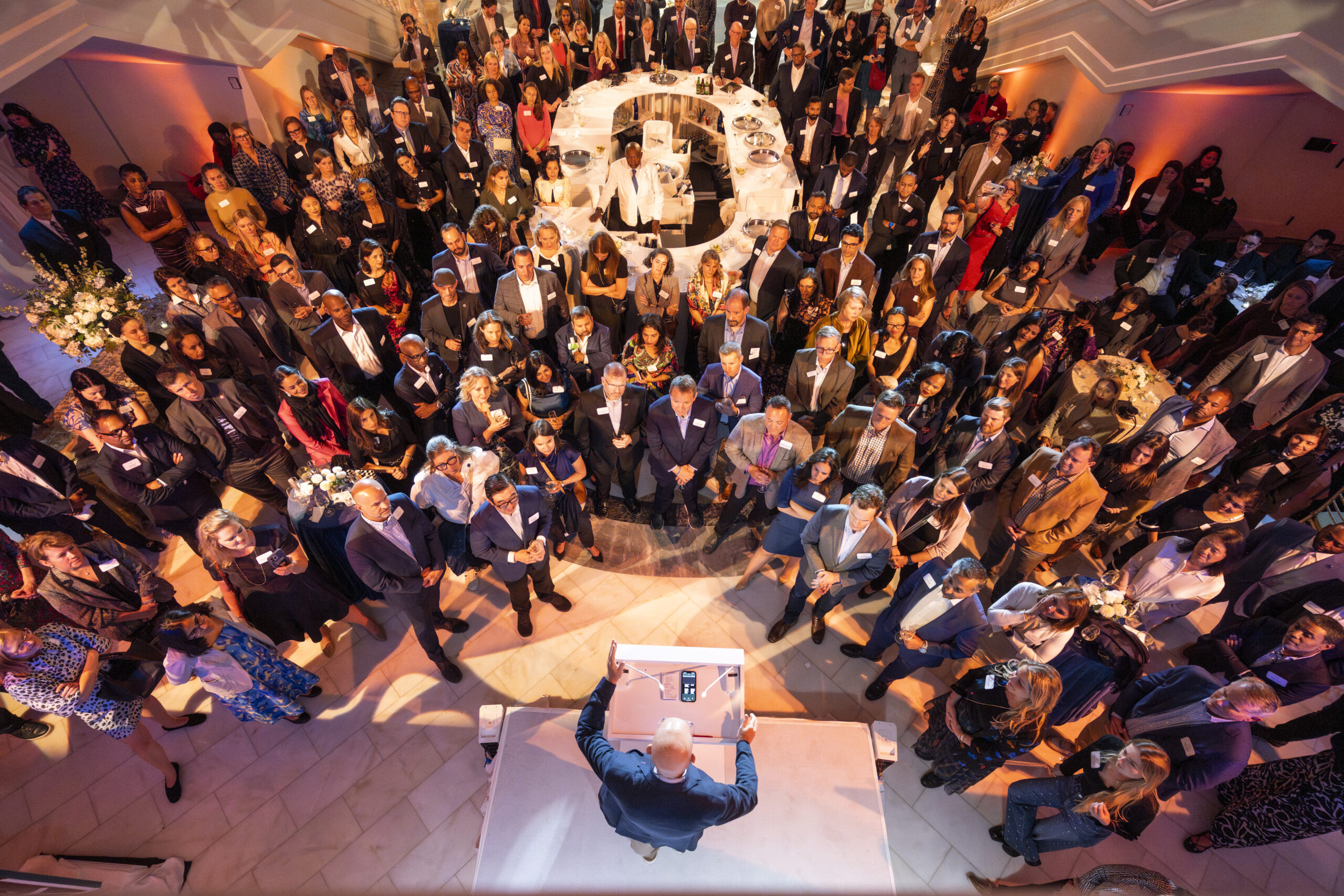
Since its inception in 2015, the Presidential Leadership Scholars (PLS) program has built a unique community of leaders committed to addressing our greatest challenges, both domestically and around the world. Over the past decade, PLS has convened nearly 600 Scholars from across business, government, nonprofit, military, and academic sectors in an immersive leadership development experience rooted in the legacies of four U.S. presidents from both political parties.
The PLS program seeks to further how leaders who span geographic, professional, and societal boundaries build trust and create solutions together. Ten years on, the program’s core goal remains the same: to equip leaders with the tools, relationships, and shared values to bridge divides and create lasting, positive change.
This report draws on reflections from alumni, historical program documentation, and findings from alumni surveys to assess PLS’s first decade, highlight its impact, and outline opportunities for continued growth.
Program origins and evolution
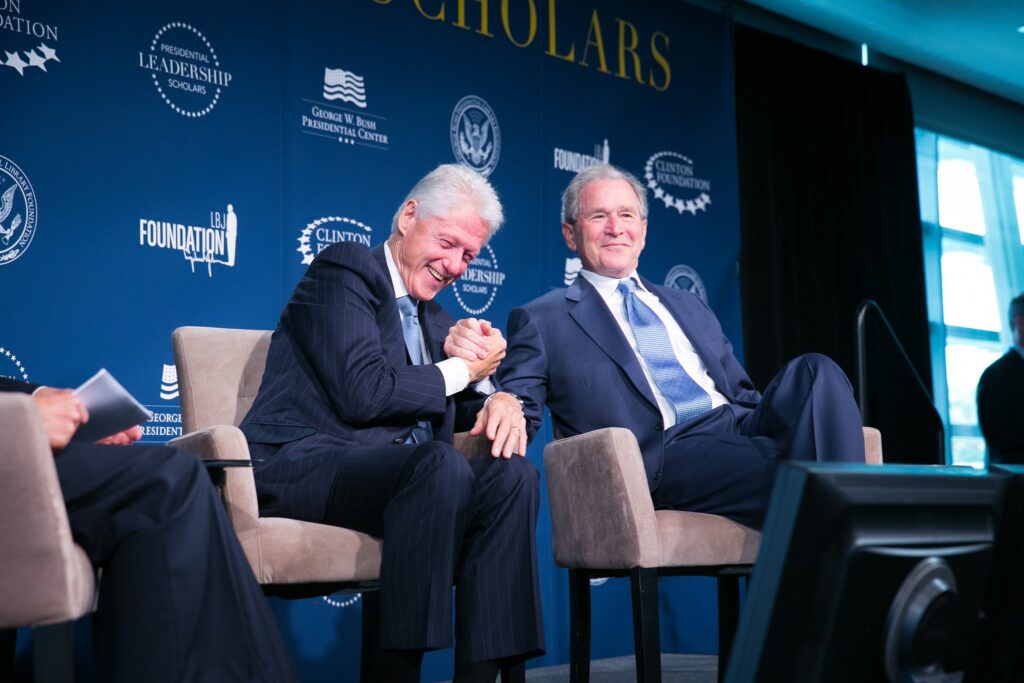
The PLS program was born out of a rare bipartisan collaboration among the presidential centers of George W. Bush, William J. Clinton, George H.W. Bush, and Lyndon B. Johnson. At its heart is the recognition that leadership requires not only knowledge and skills, but also empathy, collaboration across differences, and a grounding in shared civic values.
Over six modules, the program sharpens participants’ skills and introduces them to new ideas and ways of approaching leadership. Scholars are led through an exploration of principles that help them better address the needs of the populations they serve. The curriculum leverages presidential centers’ archives and other resources that reflect lessons in leadership from each administration, including vision and communication, decision-making, persuasion and influence, and strategic partnerships.
- The immersive experience focuses on four main elements:
- Skill development in vision and communication, decision-making, persuasion and influence, and strategic partnerships.
- Peer-to-peer learning across sectors and ideologies.
- Exposure to history through visits to presidential libraries and archives.
- Personal leadership projects to test new approaches in real time.
As one alum described the effect of this design: “The structure, the themes, the way we were brought together – it felt like a family. That’s what I’m most thankful for: the intention that binds us.”
At the program launch in 2015, Margaret Spellings, CEO and president of the Bipartisan Policy Center and former president and CEO of the George W. Bush Presidential Center, said, “Leadership is always a critical need. I’m excited to see Scholars apply the lessons, concepts, and ideas they learn through the program to the complex opportunities and challenges that lie before them.”
Bruce Lindsey, then chair of the Clinton Foundation’s Board of Directors shared, “Effective leadership is an important skill for individuals looking to make a positive difference in the world and change lives.”
A hallmark of the program is the participation of Presidents George W. Bush and Bill Clinton. They embody the spirit of PLS by demonstrating that leaders with differing perspectives can work together to solve problems.
Throughout the program, Scholars have the opportunity to engage with the former presidents as well as key administration officials, leading academics, and business and civic leaders. They share challenges, successes, and advice to help Scholars address obstacles they are encountering in their own leadership experiences. As one alum put it, “Hearing directly from presidential staffers about decision-making in crisis moments taught me more about leadership than any textbook ever could.”
Previous speakers include former First Lady Laura Bush and former First Lady and Secretary of State Hillary Rodham Clinton as well as Don Baer, former White House Communications Director and White House Director of Speechwriting; Dan Bartlett, former counselor to President George W. Bush and executive vice president of corporate affairs at Walmart; former U.K. Prime Minister Tony Blair; former Secretary of Housing and Urban Development Henry Cisneros; entrepreneur Mark Cuban; former Secretary of Defense Robert Gates; former Secretary of Labor Alexis Herman; Obama Foundation CEO Valerie Jarrett; members of the Little Rock Nine; former Secretary of State Condoleezza Rice; Andrew Young, former U.S. ambassador to the United Nations; among others.
Modules are held at each of the four presidential centers, where Scholars gain a broader understanding of each presidency. They also visit historic sites in Washington, D.C. and Philadelphia, Pennsylvania, including the White House, the U.S. National Archives, Decatur House slave quarters, and the National Constitution Center.
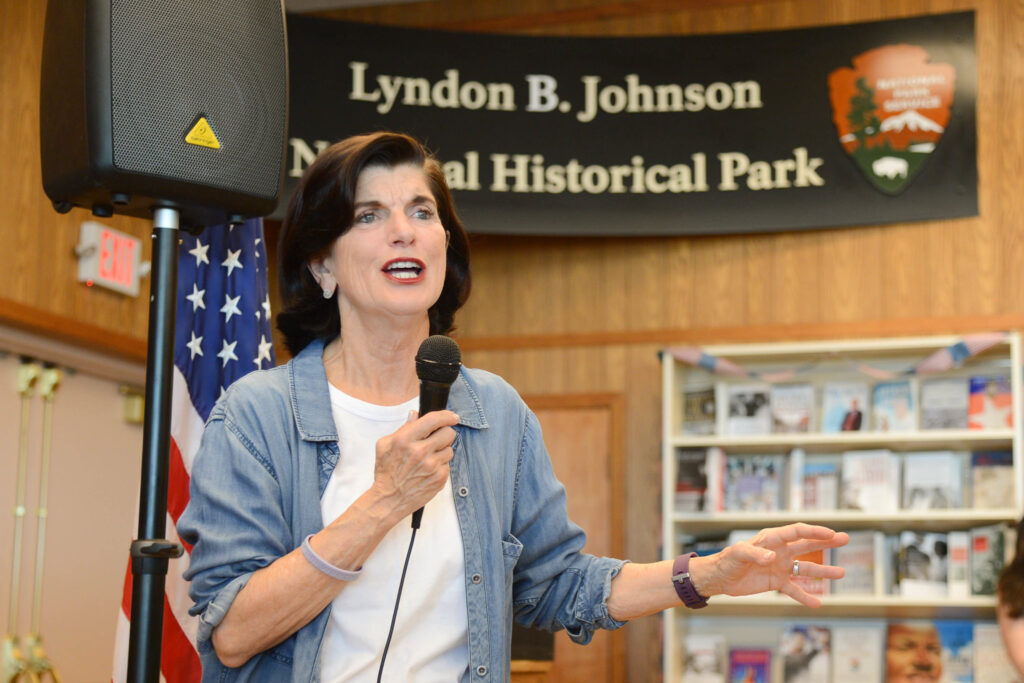
Scholars put their learning into action through a personal leadership project, intended to address a problem or pressing issue in their community, organization, country, or the world. Their project may focus on a new or existing initiative in which the Scholar is involved as part of or outside their day-to-day work. Scholars apply lessons learned through their experience in the program as they develop and implement their projects.
As the number of alumni grows, the program has also emphasized peer and alumni connections, understanding from the beginning that the six-month formal experience was only the beginning of a lifelong leadership journey.
Alumni community and demographics
The formal six-month experience of the PLS program is only the beginning of a lifelong leadership journey. Within their individual cohort, Scholars develop meaningful, productive relationships. Upon completing the in-person program, Scholars join a diverse network of nearly 600 changemakers, where they continue to collaborate and provide valued support to the projects and initiatives pursued after their time in the program. The 2025 Alumni Survey found that connections and friendships with other Scholars are consistently rated as the most valuable element, with 92% of Scholars ranking that category “high” or “very high” in value.
PLS alumni are geographically, professionally, and ideologically diverse. According to the 2025 alumni survey:
- 51% of alumni identify as women, and 49% as men.
- 51% identify as people of color, a number that has grown with recent cohorts.
- Alumni represent a cross-section of sectors: 36% business, 34% nonprofit, 15% government, and 15% military, education, philanthropy, and other fields.
- Alumni span 45 different states, plus Washington, D.C., and Puerto Rico.
Scholars consistently describe this variety as transformative. One reflected: “I work in education. Sitting next to someone from the military or corporate sector broadened my perspective on what leadership looks like.”
Alumni interviews reinforce this point: Conversations often include people with whom participants might never otherwise interact. Alumni repeatedly emphasize that PLS creates a “rare bipartisan space” where leaders can engage across differences and build enduring trust. As one alum put it, “It is one of the only places in American public life where people can truly disagree without walking away from the table.” What could be sources of conflict instead become catalysts for respect and long-lasting relationships.
Pivotal moments and crossroads
For many, entry into PLS coincided with a pivotal crossroads. Some Scholars were transitioning between roles, others grappling with personal and professional challenges, and still others searching for clarity about their purpose or making a difference on a larger scale.
Alumni describe some of these moments:
- Participating in PLS as an alternative to graduate school to gain frameworks and practical leadership experience.
- Reframing leadership after the sudden loss of a mentor, with the program offering space for healing and new purpose.
- Shifting from a successful corporate career to purpose-driven nonprofit leadership.
- Finding courage to represent rural or underrepresented communities at a national level.
- Discovering new clarity about balancing ambition with service.
One alum reflected, “I came in doubting whether my voice mattered. PLS reminded me that leadership doesn’t always look like the loudest voice in the room – it can look like persistence, listening, and building bridges.”
Leadership growth and application
The program’s impact can be measured both quantitatively and qualitatively.
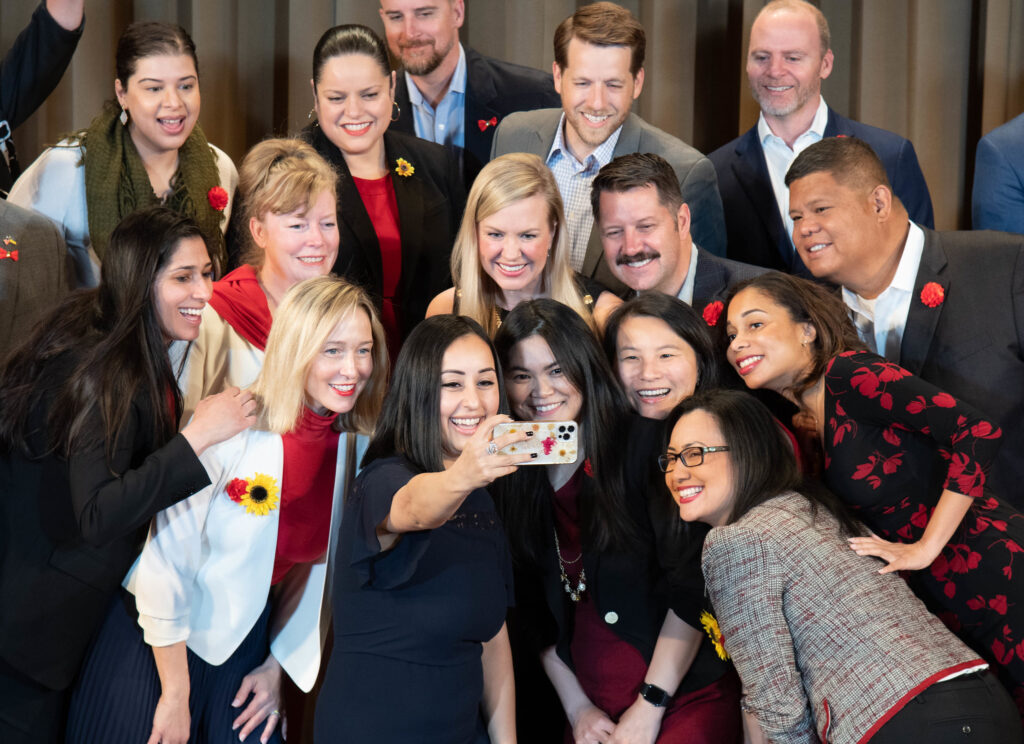
In the 2025 alumni survey, 88% of Scholars agreed that they have the leadership ability needed to succeed in achieving the positive impact they envision. About 85% reported that they are more likely to consider diverse perspectives when making decisions because of PLS. Alumni also frequently highlight increased confidence, resilience, and openness to taking risks.
Alumni narratives illustrate this:
- Some described the experience of learning to have “tough conversations on social issues” with peers who disagreed – and discovered respect and laughter afterward.
- Others credited PLS with transforming their approach to public service: “It reaffirmed the power of community and left me with a renewed sense of purpose to drive change – one step at a time.”
- Several pointed to specific skills – such as negotiation or storytelling – that they continue to use daily in their leadership roles.
Many credit PLS with shaping major career decisions, from launching new nonprofit organizations to leading policy reforms, often resulting from their personal leadership projects. For others, the impact was about self-growth, such as developing the confidence to speak openly about difficult experiences for the first time in a professional setting.
Survey results confirm that PLS has had a measurable impact on alumni leadership:
- 91% of alumni reported that PLS has strengthened their leadership skills.
- 79% of alumni said their opportunities to make a positive impact in society have grown because of PLS.
- 85% reported that the program improved their ability to consider diverse perspectives when making decisions.
Qualitative feedback underscores these numbers. Alumni describe how the program gave them both confidence and tools to make greater impact. One noted, “The program challenged me to step back and ask myself if I was truly using my gifts to the fullest. It inspired me to not settle – to aim for something greater.”
Another shared, “The deep and authentic conversations around the complexity of leadership have been incredibly valuable, allowing me to be more vulnerable.”
Another alum shared, “I no longer feel like the uncertain leader who entered the program. Now, I lead with authenticity and purpose, equipped with the tools and confidence to guide my organization forward.”
“It is a leadership experience that pushes participants to challenge their assumptions, lean in with curiosity, and seek understanding,” shares Kelley Jiou, director of leadership and programming at the George W. Bush Institute, and co-director of the PLS program.
Diversity of perspectives
A defining strength of PLS is its ability to bring people together across lines of difference. Alumni consistently describe learning to move beyond assumptions and stereotypes.
In interviews, Scholars recalled moments when they felt truly heard as they shared experiences of race, class, or ideology in ways that had rarely been possible in professional settings. One described how a dialogue about community-police relationships – sparked by current events –was the first time they felt colleagues were ready to engage fully with their lived experience. These moments of vulnerability created lasting bonds and reshaped how participants approached conflict and collaboration in their own communities.
Networks and collaboration
Beyond individual growth, the alumni network itself has become a defining feature of PLS. Some survey findings:
- 94% of alumni remain in contact with peers from their cohort.
- 70% have collaborated professionally with at least one other PLS alum.
- Alumni describe the network as “a lifeline” – a source of both professional opportunities and personal support.
These connections extend into tangible professional collaboration:
- Alumni have worked across party lines to build city task forces, launch nonprofits, and co-author policy recommendations.
- Cross-sector partnerships have emerged in areas such as rural economic development, veterans’ affairs, education equity, and climate change.
- Informal exchanges often result in practical support – introductions, troubleshooting, and sharing resources – that extend the impact of PLS well beyond the formal six-month program.
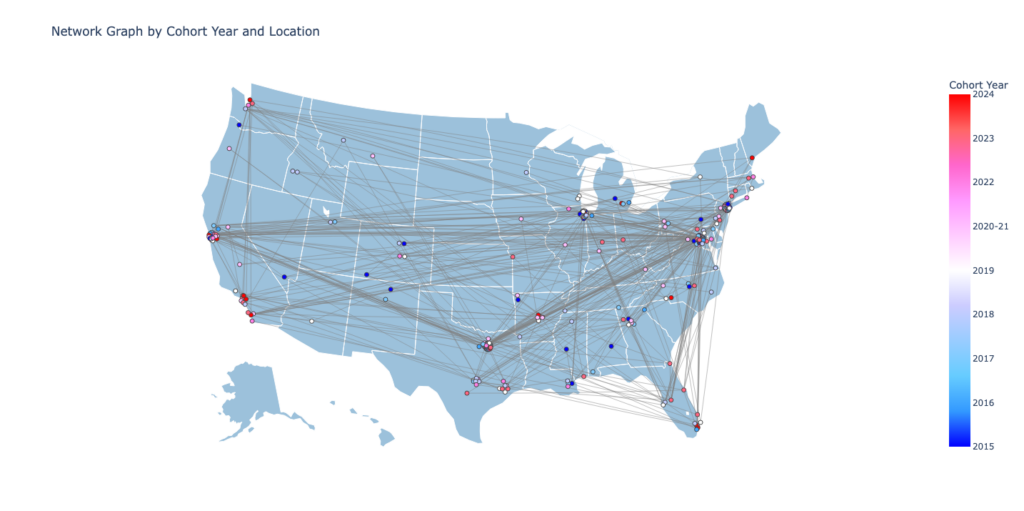
The map below illustrates the multiple and multitude of connections among and across different alumni classes.
As one alum put it, “At the PLS program, it felt like everyone was genuinely driven to leave the world a better place. This authentic motivation, combined with careful and thoughtful selection of Scholars meant that the people in the room were there to learn from one another and work for something bigger than themselves.”
Another shared, “The people, the content, and the conversations have significantly shaped how, when, and where I contribute to the world we live in. I have more confidence, a better understanding of diverse voices, and a community where I know there are people I can trust to be straightforward, honest, and kind.
The curriculum: Frameworks and insights
While relationships are central, the structured curriculum is core to the experience and leaves a lasting imprint. Exposure to presidential history, and skill development in vision and communication, decision-making, persuasion and influence, and strategic partnerships provide both inspiration and practical frameworks.
Alumni describe some of the lessons learned:
- Understanding that even leaders at the highest levels operate with imperfect information, underscoring the importance of humility and adaptability.
- Learning to frame organizational growth in terms of mission and values rather than scale alone.
- Seeing the value of compromise and shared goals in contexts where ideology might otherwise prevent progress.
- Building consensus and effectively navigating complex group dynamics.
As one alum reflected, “The PLS network and lessons learned from the modules were essential in building consensus across the task force, allowing us to successfully provide recommendations that are actively being pursued by the mayor and city officials.”
Looking forward: The next decade of PLS
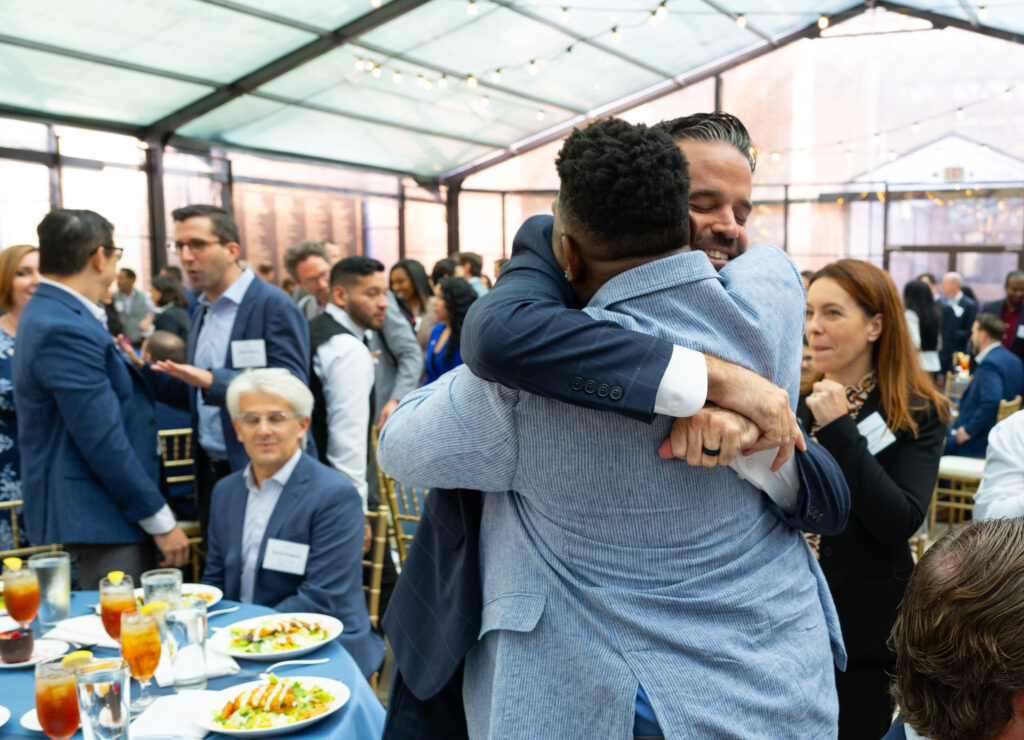
When reflecting on the past 10 years, several current and former PLS staff and Advisory Board members shared their hopes for alumni impact and considered the next 10 years.
Stephanie S. Streett, executive director of the Clinton Foundation said, “For the past 10 years, this collaboration among the four presidential centers has made an unprecedented investment in nurturing action-oriented leadership that is essential to our democracy. The next 10 years of PLS will see an expanding and diversifying network of alumni making a greater impact in communities across this country.”
Holly Kuzmich, former executive director of the George W. Bush Institute, shared, “Alumni can be at their best when they put into practice in their workplaces and community the tools and tactics the program dives into on communications, decision-making, and strategic partnerships.”
Fred McClure, associate vice president for leadership and engagement at Texas A&M University hopes, “alumni will bring a deep passion for selfless service to addressing the challenges faced by society.”
David J. Kramer, executive director of the George W. Bush Institute, said alumni should continue to “invest in their relationships with one another because together, their impact is limitless.”
All noted the need to embrace differences, find common ground, and solve challenges through meaningful collaboration.
Looking ahead, all shared that one of PLS’s biggest strengths is the diversity of participants – particularly across political ideology – who share a commitment to principled leadership and collaboration.
Holly Kuzmich said, “The bipartisan nature of the program is needed now and into the future more than ever.”
David J. Kramer said, “The success of our nation depends upon individuals who are committed to finding common ground and working together in service of the greater good … and for years to come.”
The future of the PLS program is a beacon of hope for current and future alumni. As Mark Updegrove, president and CEO of the LBJ Foundation, stated, “As long as civilization has existed, leadership toward the greater good has been the deciding factor in advancing society –and it matters as much today as ever. Presidential Leadership Scholars are, as LBJ would say, ‘doers and builders.’ They are the ones who will shape our future, and it is my hope that the PLS experience enhances their ability and will to better our nation and the world.”
Conclusion
The first decade of the Presidential Leadership Scholars program demonstrated the power of investing in leaders not as isolated individuals but as part of a broader ecosystem of civic renewal.
“The deeply diverse group of individuals with dramatically different lived experiences and a variety of perspectives from a multitude of sectors has introduced Scholars to different ways of defining problems and solutions,” said Dr. Mike Hemphill, senior director of leadership development at the Clinton Foundation and co-director of the Presidential Leadership Scholars program.
Alumni have grown in confidence and skill, forged a durable network, and begun to shape their communities in meaningful ways. The next decade presents an opportunity to strengthen alumni infrastructure, expand inclusivity, and amplify collective impact.
As one Scholar said, “PLS became a turning point in my journey. It provided the skills, community, and vision to transform both my career and my life.”